
Our Templar Crusade was not a holy war or battle; ours was a campaign to learn. We journeyed to Tomar and found a learned individual to help us to understand the history of the Order and to dispel some of the mistruths. To that end, we were victorious in our crusade.
We met our guide, Nikita, in front of our hotel and took a little stroll to get to know each other. Nikita is an extremely interesting person. Briefly: he was educated and worked as a trauma surgeon. At a point in his career, he went back to school and received a second degree in Theology. He has since taught, written and researched the Templar Brotherhood.
We continued our stroll through town, stopping at a small museum along the river. There are many small museums in Tomar, all independent of each other. We also stopped back at the Templar shop from yesterday. Nikita was hoping to find a book for us, but they didn’t have an English translation available.
Nikita asked us some questions as we were walking and seemed pleased by our interest and knowledge level. We weren’t here to hear tales of Templar treasures or secret conspiracies. I think we passed our audition.
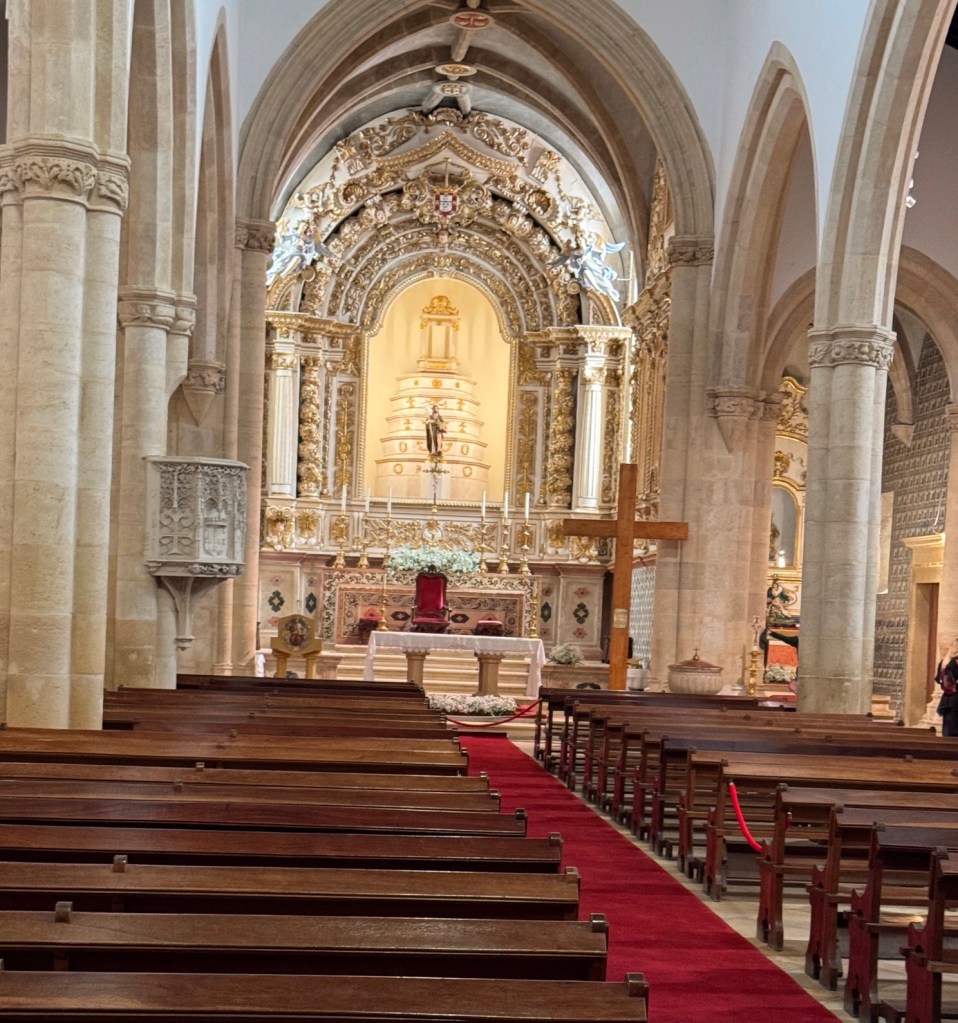
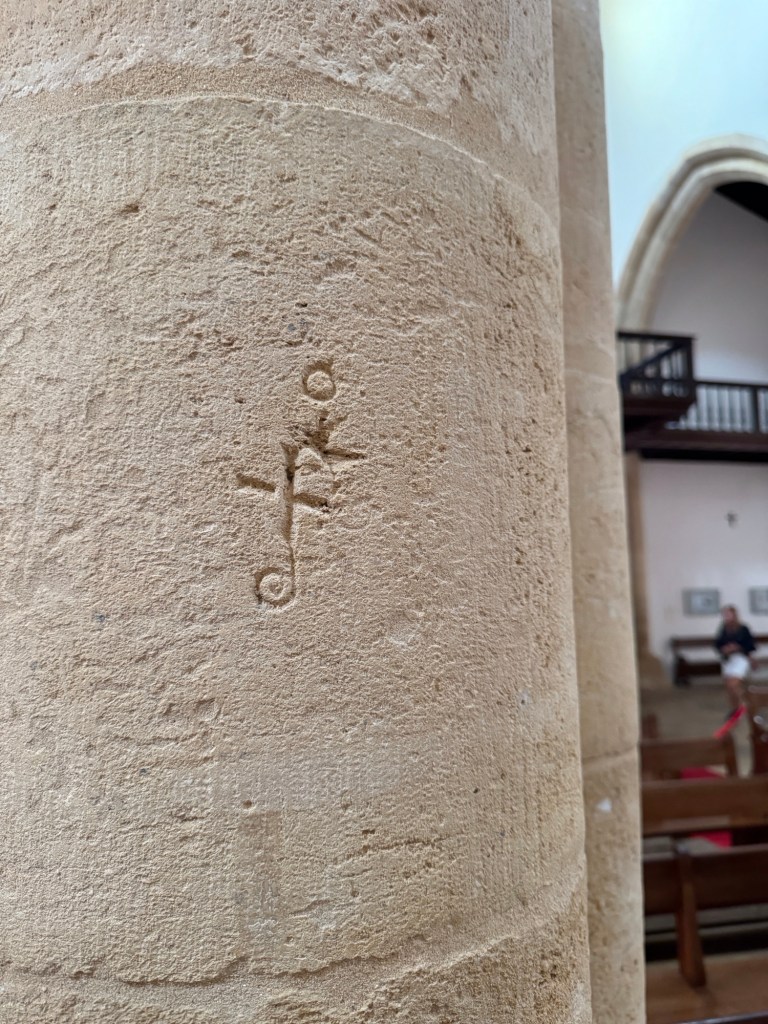
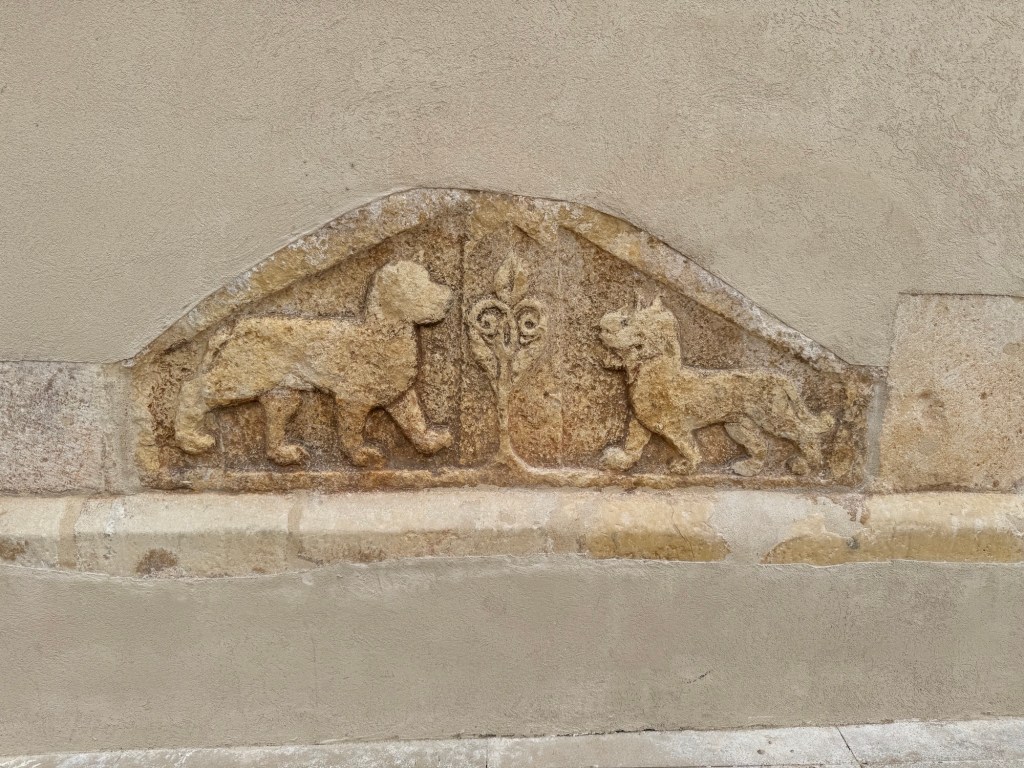
Our first visit was to Igreja de São João Batista or the Church of Saint John the Baptist. It’s a beautiful church, originally built in the 15th century, that contains ornate design features as well as Templar symbology.


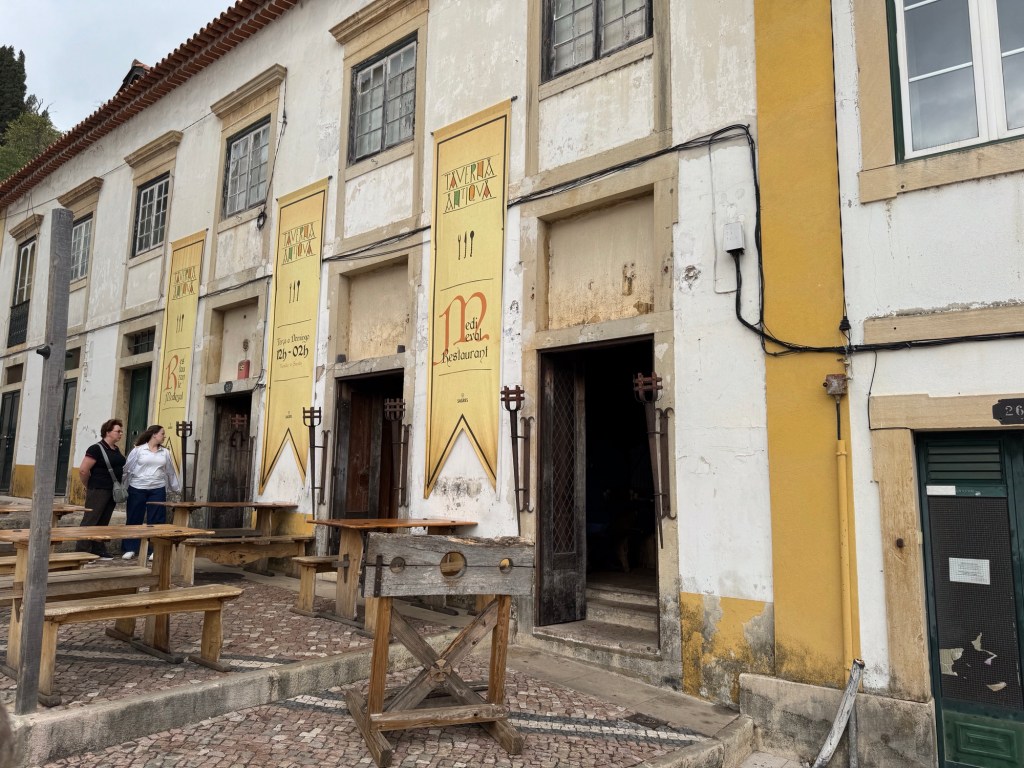
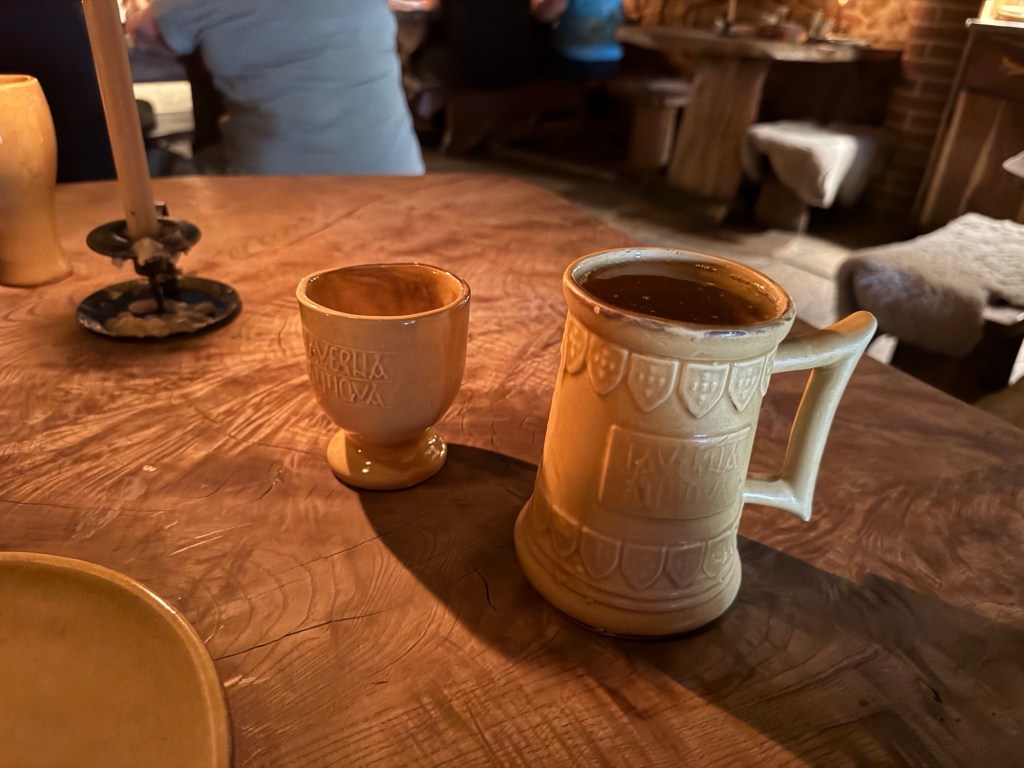
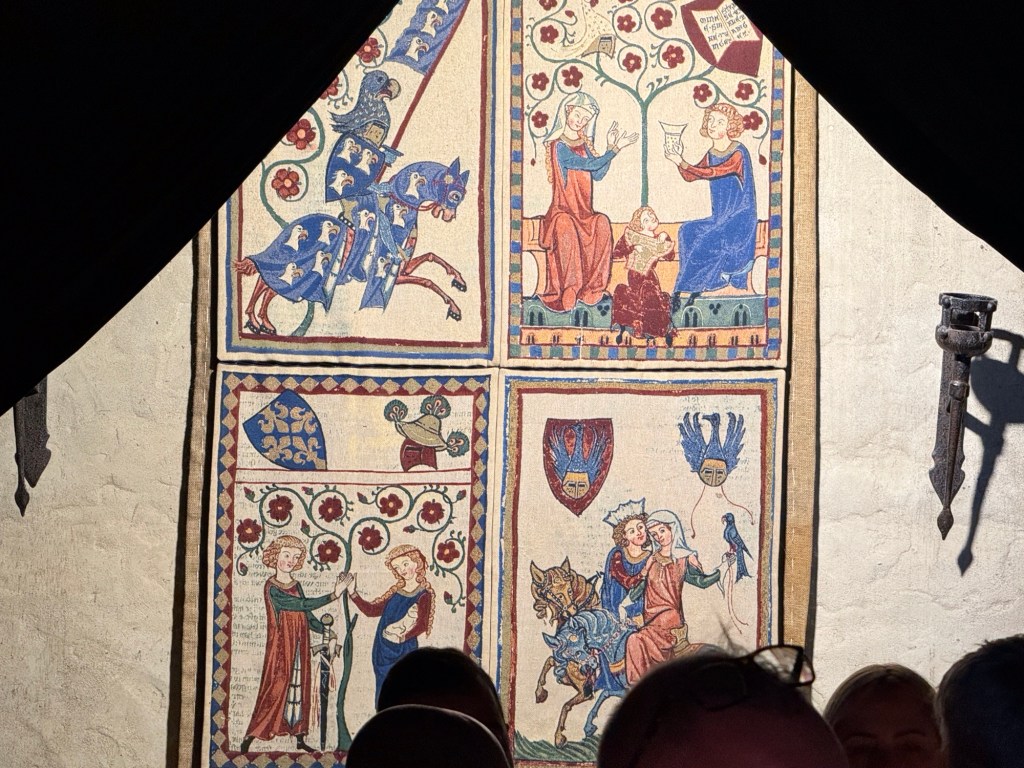
Our next stop was lunch at Taverna Antiqua. It is a medieval-themed restaurant. Candles on the tables are the only illumination. The wait staff is in period clothing. The menu, as would be typical of the time, is heavy on meat and fish. I tried my first mug of mead with my meal!
While keeping with the medieval theme, this was not an adult Chuck-E Cheese. The food was delicious and the ambiance was delightful.

After enjoying our lunch, we drove up to the Convent of Christ and the Templar Castle that protected it. From the town square, the castle looms large on the hilltop. When you arrive, it appears to be even larger.
Since Nikita has connections, we slipped in through the back door to start our journey. It was the service entrance, but stay with me for the dramatics.
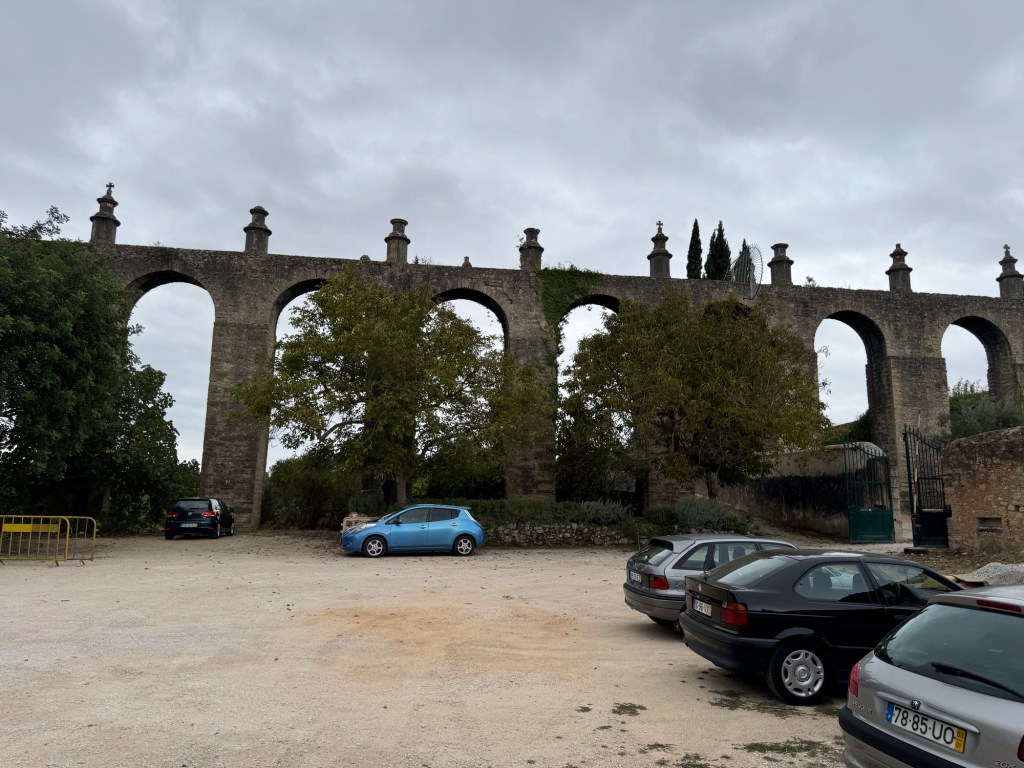
From the parking area, we had a great view of the Aqueduct Dos Pegões. It is a six kilometer long aqueduct that provided the convent with water.
We were introduced to Nikita’s colleague – Mr Rui before entering and beginning our tour.
We walked through the convent with Nikita pointing out details and explaining some of the symbology. Among the many fascinating items we saw on our walk, there were a few that stood out:
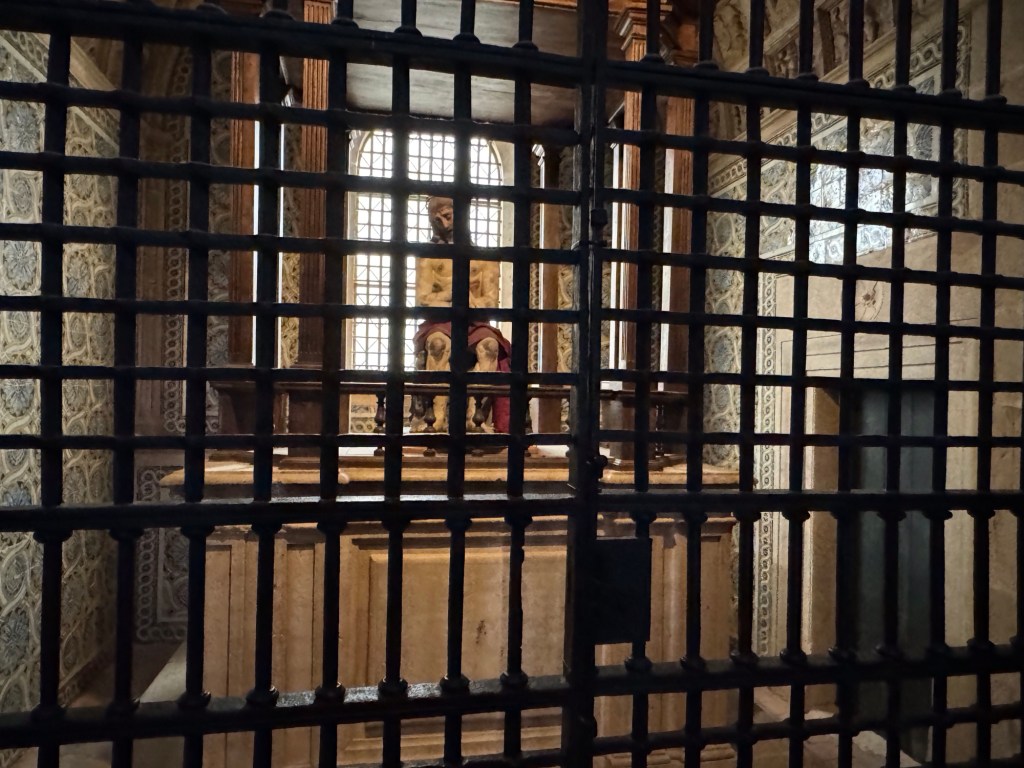
There is a magnificent statue of a Seated Jesus. It appeared to depict him after the crucifixion. Unfortunately, the security gates around it didn’t allow for a clearer picture or the ability to study it close up.
A three-faced ceiling medallion in the eating area appeared to be showing the past, present and future coexisting.
Lastly, a large reflectory where the Knights would have taken their meals and listened to scripture readings.


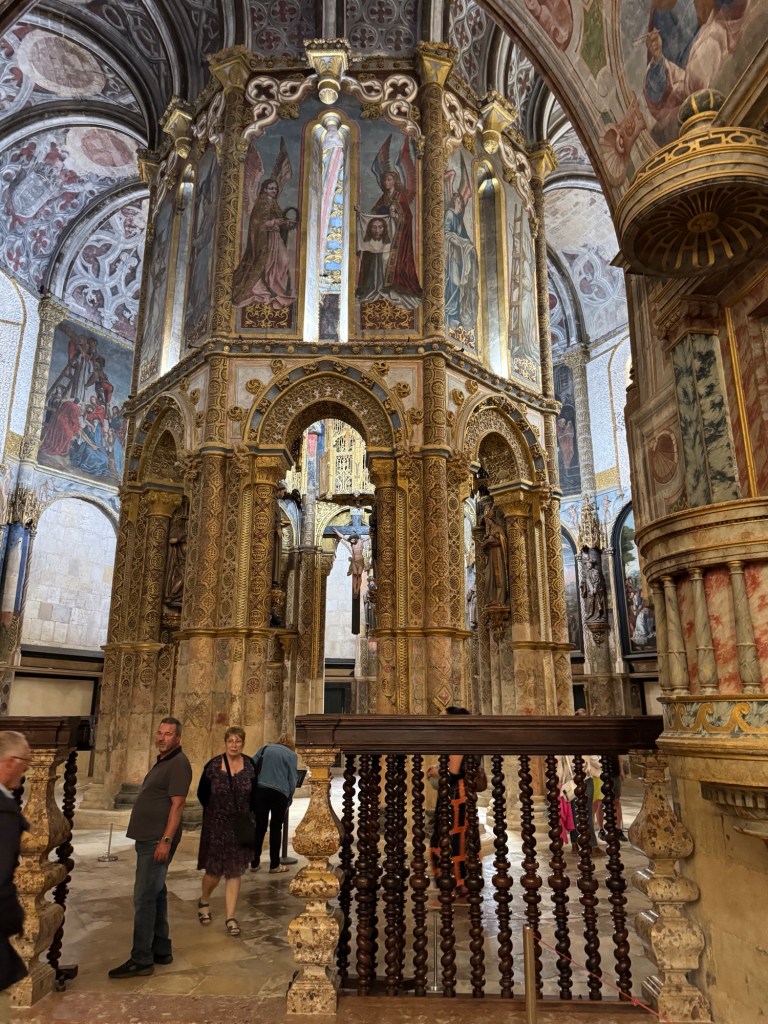
Next we headed down to the rotunda or Charola. The Charola dates back to the 12th century. Originally, it was a fortified Oratory inspired by the Temple of Jerusalem. Much of the decor comes from the 16th century, as it was commissioned by King Manuel.
The paintings, gold and statues are quite a contrast with the rest of the Convents simplicity.

As you might expect, the entrances, exits and stairs in ancient buildings aren’t always smooth and even. One such entrance taught me to pay attention by dropping me to my knees. My newly found limp shall remind me of our experience at the castle.
We then made our way through the dormitory area. It was fascinating to see the small tricks they used to try and spread heat throughout the rooms, though heat in the colder times would still have been scarce.
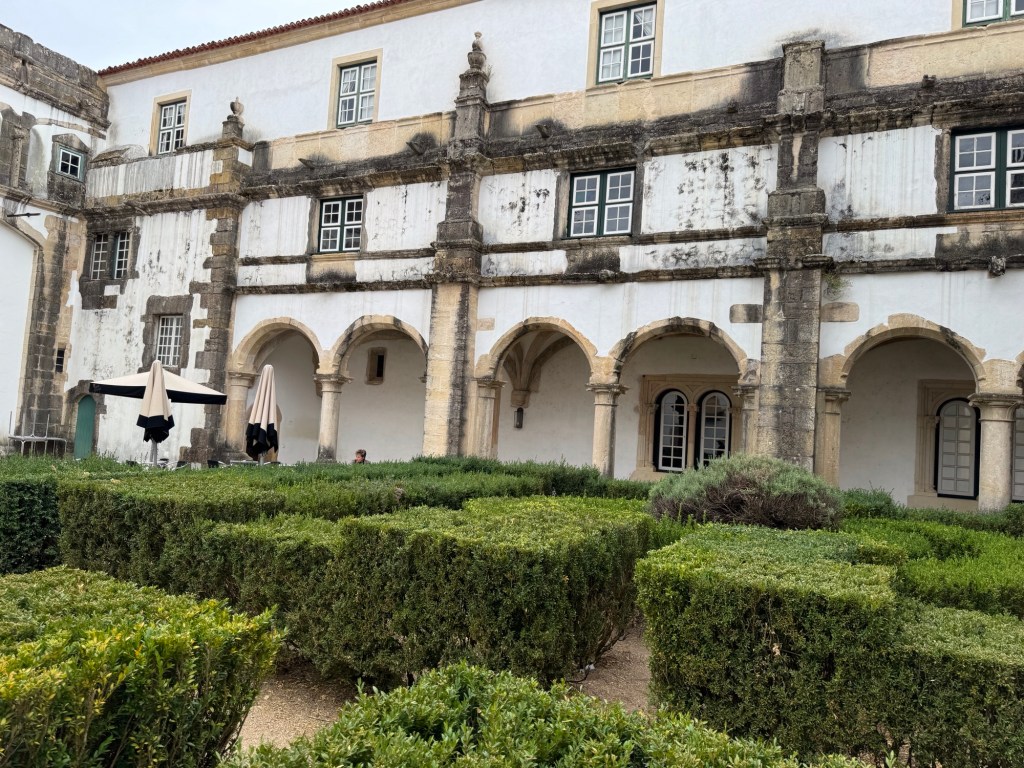
There were many cloisters located throughout the convent. These were places where people could gather or find solitude as needed.

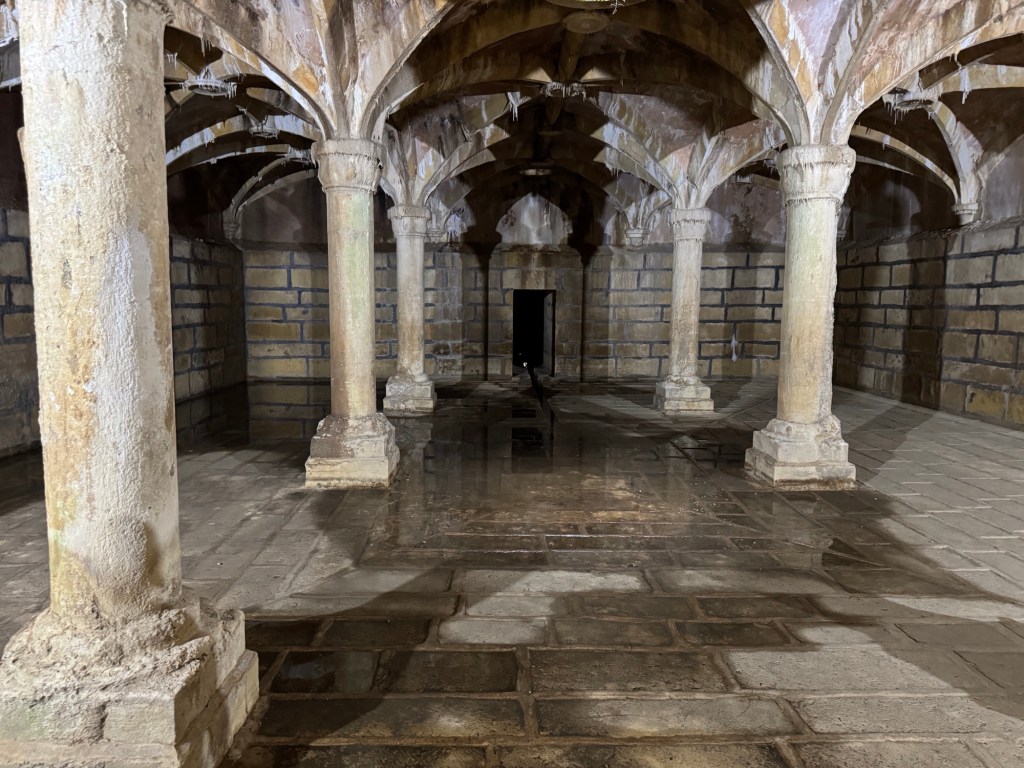
We were able to see one of the cisterns – empty, of course. Though these were necessities, seeing the complex systems that were built was very interesting.
After concluding our tour, we met back up with Mr Rui, who then showed us another necessity – the septic system. It’s one of their current restoration projects. Intricately designed back in the 15th century, it moved the waste away from the convent out into the surrounding woodlands. Interestingly, it was built so that the kitchen waste and human waste were not co-mingled.
Overall, today was a fabulous history lesson.
~~~~~~~~~~~~~~~~
The individuals who work at the convent and castle take great pride in maintaining them and their legacy. Government funding could be much better, but different people have different ideas on where the money should go. The UNESCO designation helps, but countries need to be more diligent. Once places are gone, they’ll never be back.
There was so much to see and to take in. We enjoyed the discussion time we had with Nikita as we headed back down to town.
Sue and I went back to the room to decompress for a bit. We had so much to talk about. We saw and learned so much today.
Nikita had made a reservation for us at an Indian Restaurant called Star Kitchen. It was drizzly raining, so with umbrella in hand, we headed over. The food was wonderful and the portions were plentiful. It was a nice change of pace from the other meals we’ve been eating.
Getting back to the hotel, we decided to get a good night’s rest as we had more visits in the morning.
~~~~~~~~~~~~~~~~~~~~
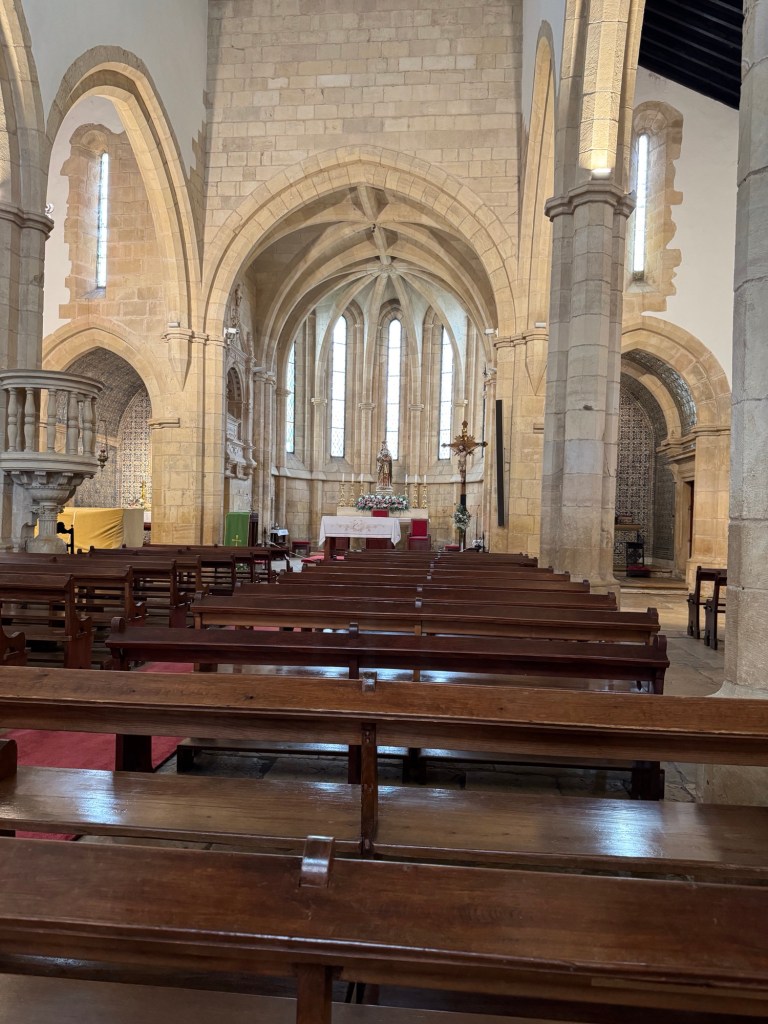
We started our day with a stop at Igreja de São Maria dos Olivais or the Church of Saint Mary of the Olives. Sue and I had walked over on Monday, but couldn’t go inside. Today, we did!

The 12th century church was the seat of power for the Templar Grandmasters in Portugal. In fact, 13 of the 22 grandmasters were buried here during the 13th century.

Our next visit was to the Almourol Castle – a short distance from town. It lies on a small island in the Tagus River. It was another protective castle built by the Templars. Through the light rain, the castle looked even more brooding.

Our final visit on the Templar trail was a small watchtower located in the town of Dornes, watching over the Zêzere river. It was one of the first Templar watchtowers built in Portugal.
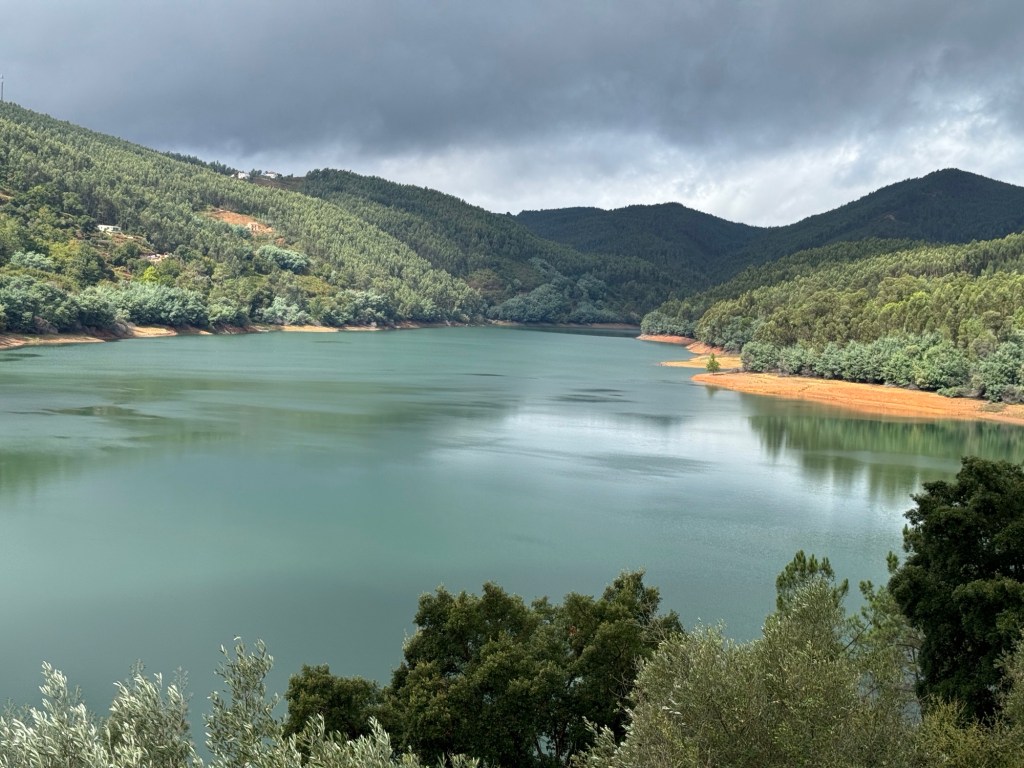

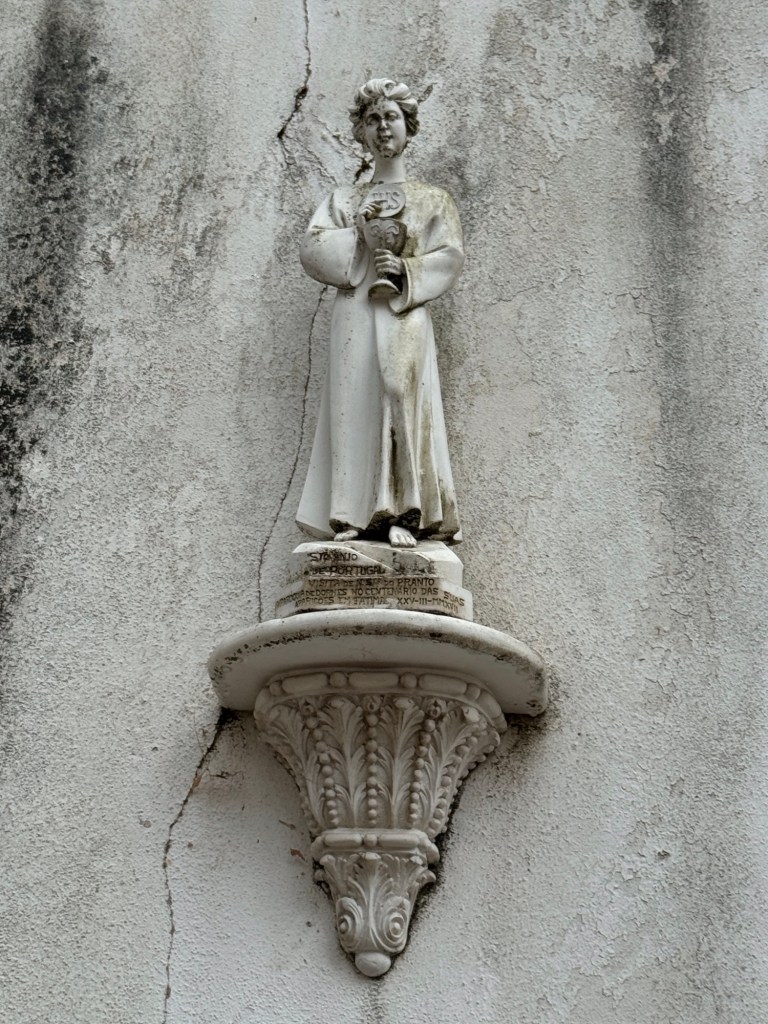


With that, our Templar quest was complete. We talked about the things we had seen and Nikita answered all of our questions as we drove back to town.
Nikita dropped us off at the Convent so that we could purchase the books we had looked for the day before. We exchanged goodbyes and parted, somehow knowing that we would meet again. We had met a new friend and shared some wonderful and deeply meaningful time together.
Sadly, the books we wanted were not in stock. I’ll find them in another shop or online. We walked around and then down from the castle.


When we got back to the room, we went through our photos and talked about our experiences. We realized that we had talked for too long and that most of the restaurants, including the one we were planning to go to, would be closing soon. So instead, we found a small tapas bar called 100 Montaditos and had some nibbles and wine. It wasn’t fancy, but it was fine until dinner.
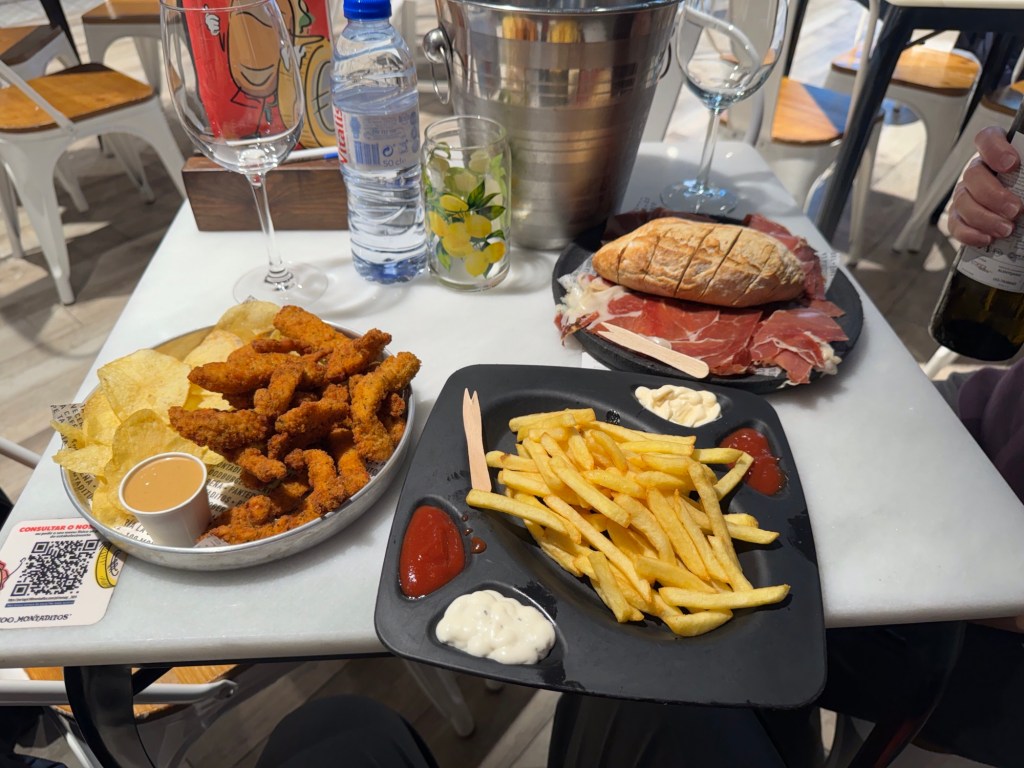
It started raining again while we were eating, so we decided to forego walking around town and just went back to the hotel to enjoy some music and the fireplace.
Having enjoyed yesterday’s lunch, we made plans to return to Taverna Antiqua for dinner. Our reservation was at 7:30 and we were ready for some dinner.
Our waitress was a delight. We chit chatted for a few minutes before ordering and before the restaurant got busy. Sue ordered the wild boar pie with vegetables, I ordered some asparagus tempura to share and then the roasted chicken leg with vegetables and herbed grain. They have wines at various levels from house to royalty; we selected a wine at the Clergy level that was very good.


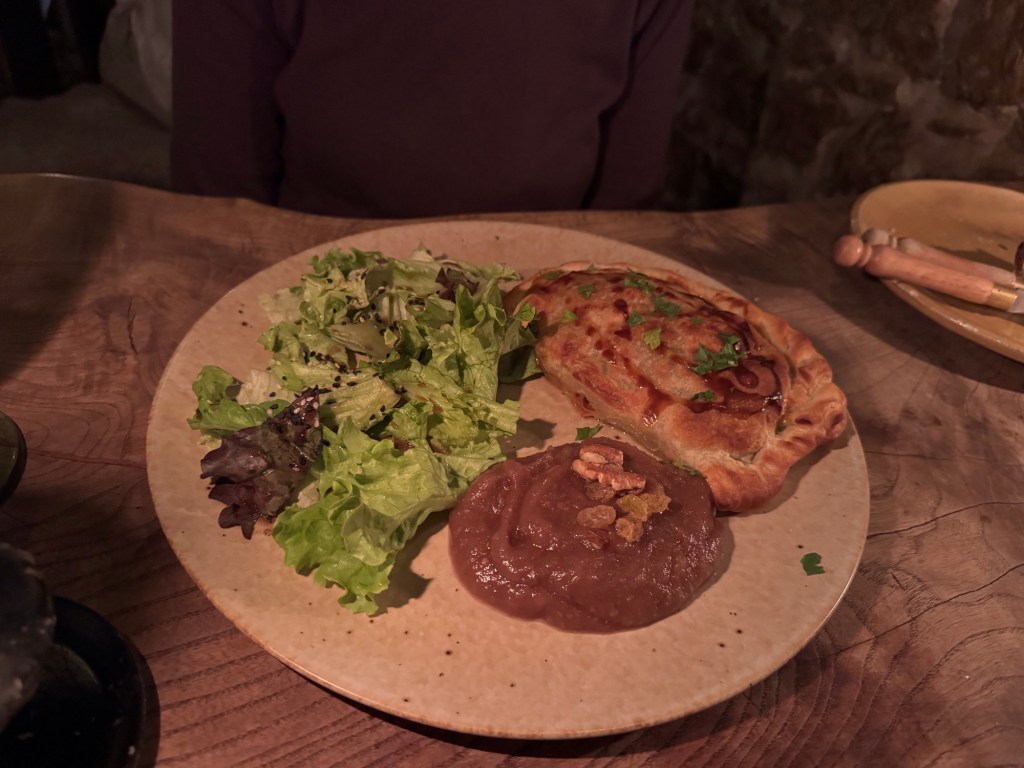
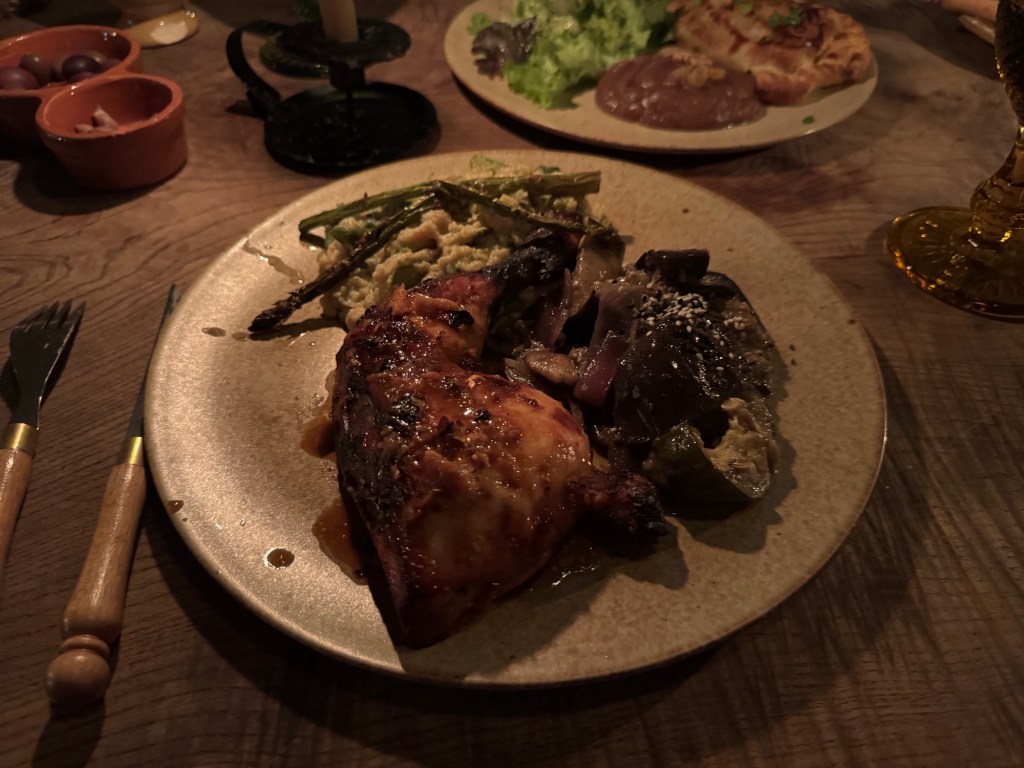
We had a wonderful meal and a delightful evening to cap off our day.
All that was left was to get a good night’s sleep before moving on to Nazare.


 Slightly Whirled - A Traveler's Tales